
“She Eats Dal Every Day. Why Is Her Hemoglobin Low?”
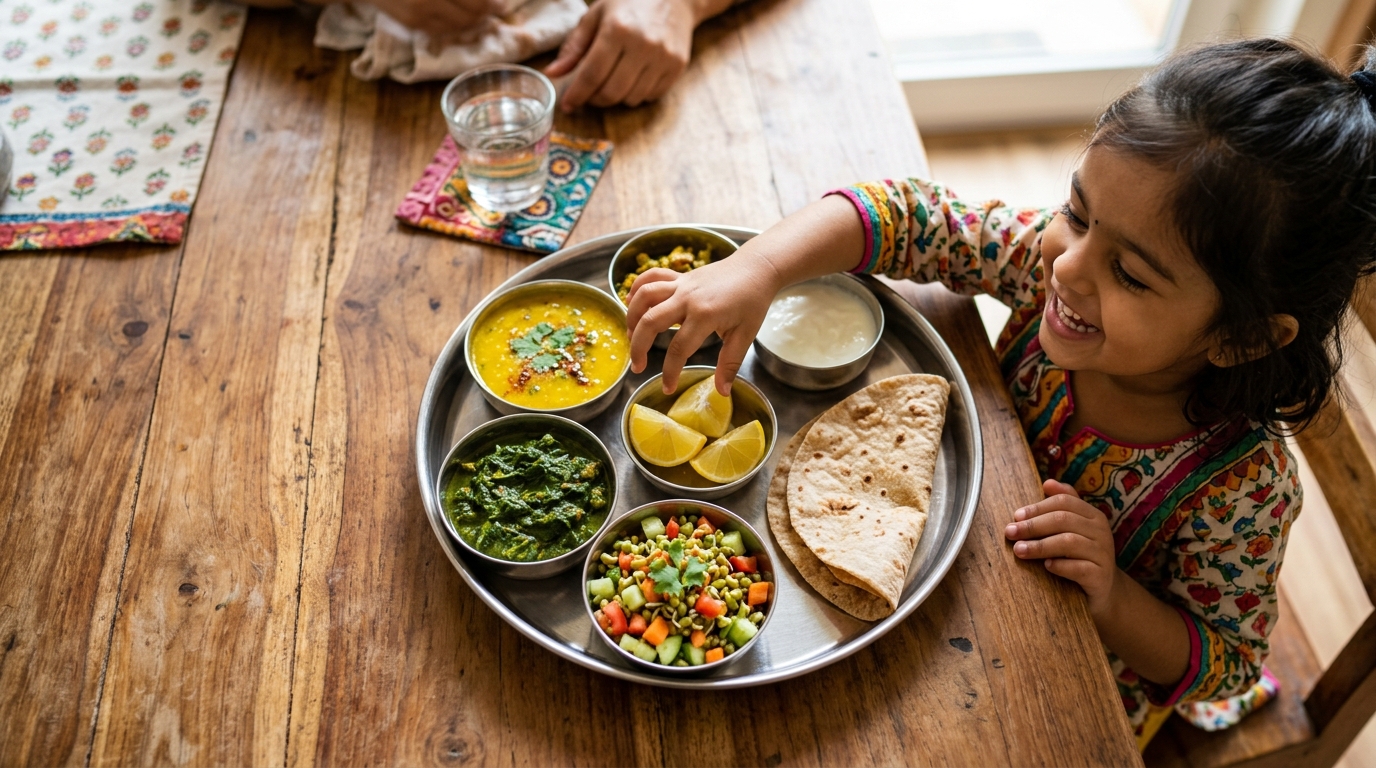
“Doctor, we cook fresh food at home. She eats palak, dal, and roti. How can her hemoglobin be only 9.5?”
I hear this from vegetarian parents in our clinic almost every day. The unspoken fear is guilt: did our family diet fail our daughter?
No. More than six out of every ten Indian toddlers have mild iron deficiency, even in families with abundant food on the table. The problem is almost never the amount of iron on the plate. The problem is what happens to that iron inside the stomach.
The Big Culprit: Too Much Milk
In most Indian households, milk is treated as the ultimate health food. If a toddler refuses dinner, parents sigh with relief when she finishes a 250 ml glass of warm milk at bedtime.
Here is what nobody tells parents: calcium and iron fight for the exact same door into the bloodstream. When a child drinks three or four glasses of milk a day, calcium wins every time. The iron in the lunch dal simply passes out in the stool without being absorbed.
And if your daughter is currently drinking a litre of milk a day, do not beat yourself up. We all did what our elders told us. Just start dialing it down tomorrow to two small cups (about 400 ml total).
Three Small Habits That Double Iron Absorption
1. Squeeze half a fresh lemon over the dal. Plant iron needs acid to break down into an absorbable form. Vitamin C is the most potent iron enhancer in nature. A squeeze of nimbu on the sabzi or giving sliced oranges with a meal immediately doubles the iron that actually enters the blood.
2. Keep a two-hour gap between milk and meals. Give milk in the morning after waking up, or as a standalone snack. Never use milk as a beverage to wash down lunch or dinner.
3. Soak and sprout your pulses. Raw lentils and grains contain natural compounds called phytates that trap iron. Traditional soaking overnight or sprouting moong breaks down phytates and frees the trapped minerals.
The Subtle Tells to Look For
Iron deficiency does not happen overnight. You will notice behavioural tells before any blood test:
- Fussy at mealtimes and irritable by late afternoon, even after a nap.
- Tiring quickly at the playground compared to other children.
- Chewing on ice cubes, licking chalk, or trying to eat pencil erasers (a classic reflex called pica).
When a Supplement Helps
If hemoglobin has dropped below 11, diet alone can take six to nine months to rebuild bone-marrow iron reserves. Liquid iron tonics work, but many children spit them out because of the harsh metallic aftertaste, or parents stop giving them because they stain the front teeth black.
That is why gentle, chewable iron gummies with Vitamin C exist—to serve as a temporary two-to-three-month bridge while you get the kitchen habits in place. They do not replace a balanced thali, but they ensure your daughter does not spend her preschool growth months running on low fuel.
Explore Chubears: Learn more about our Chewable Iron & Vitamin C Gummies formulated specifically for growing children with pediatric safety limits.